Real Customers · Real Cars
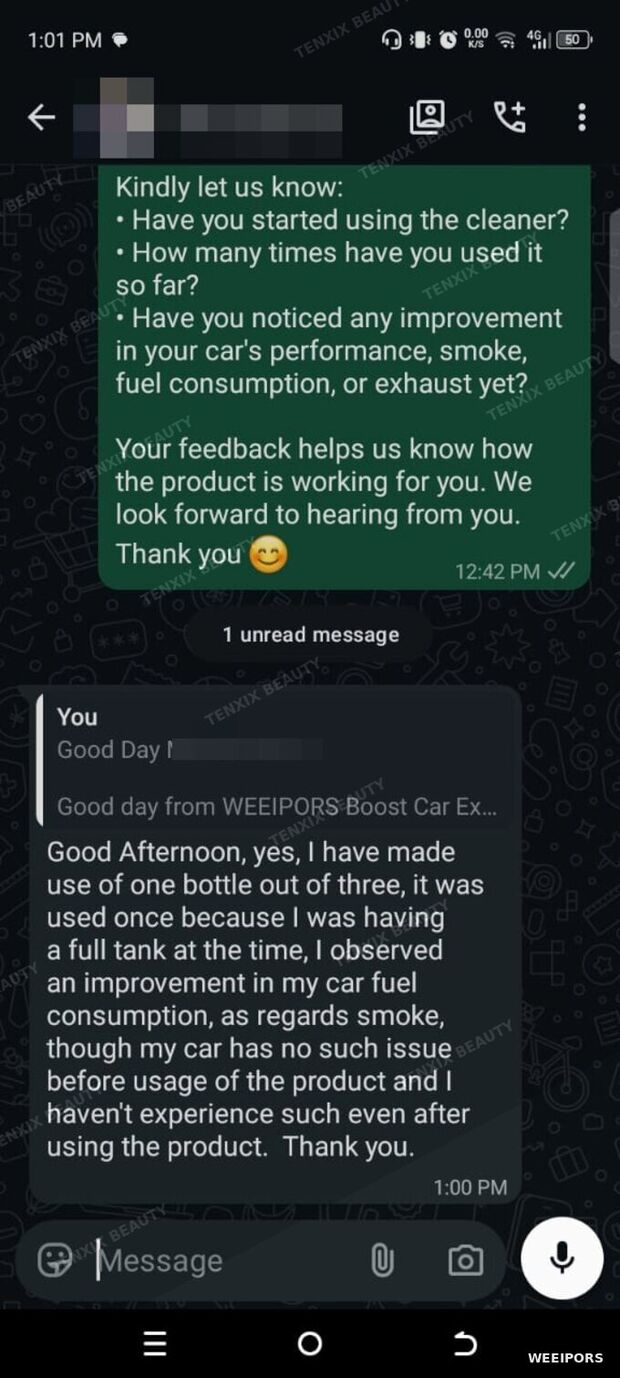
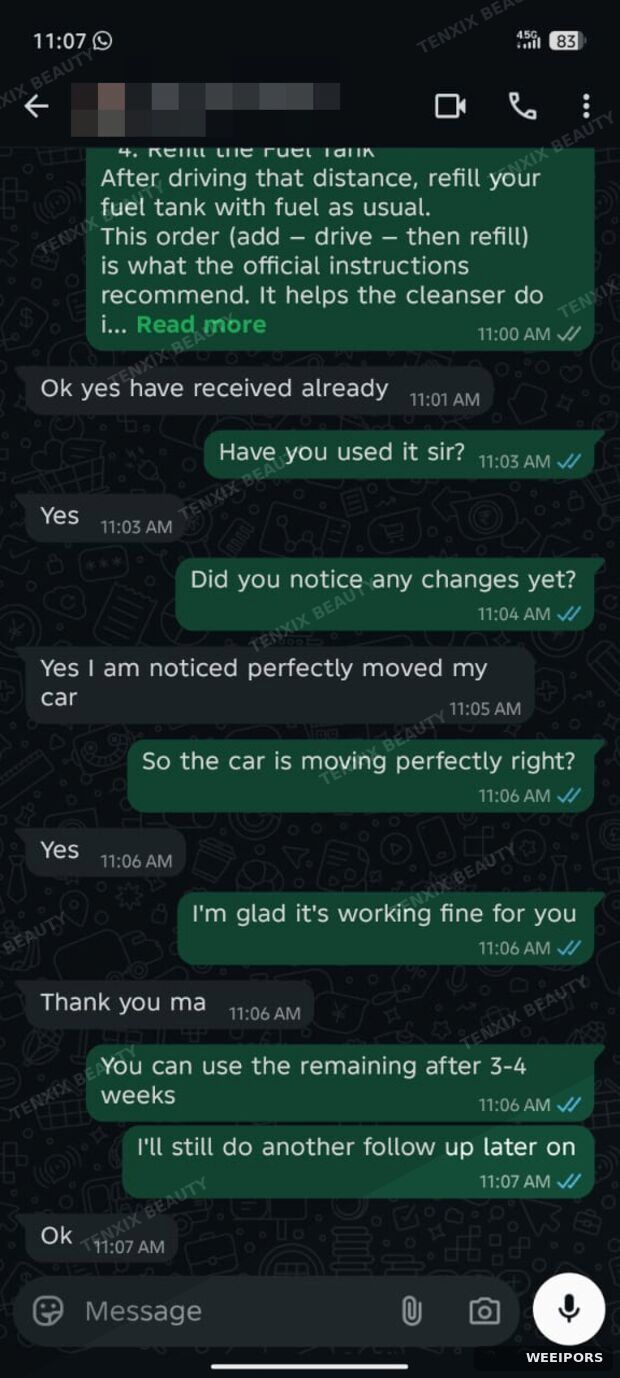
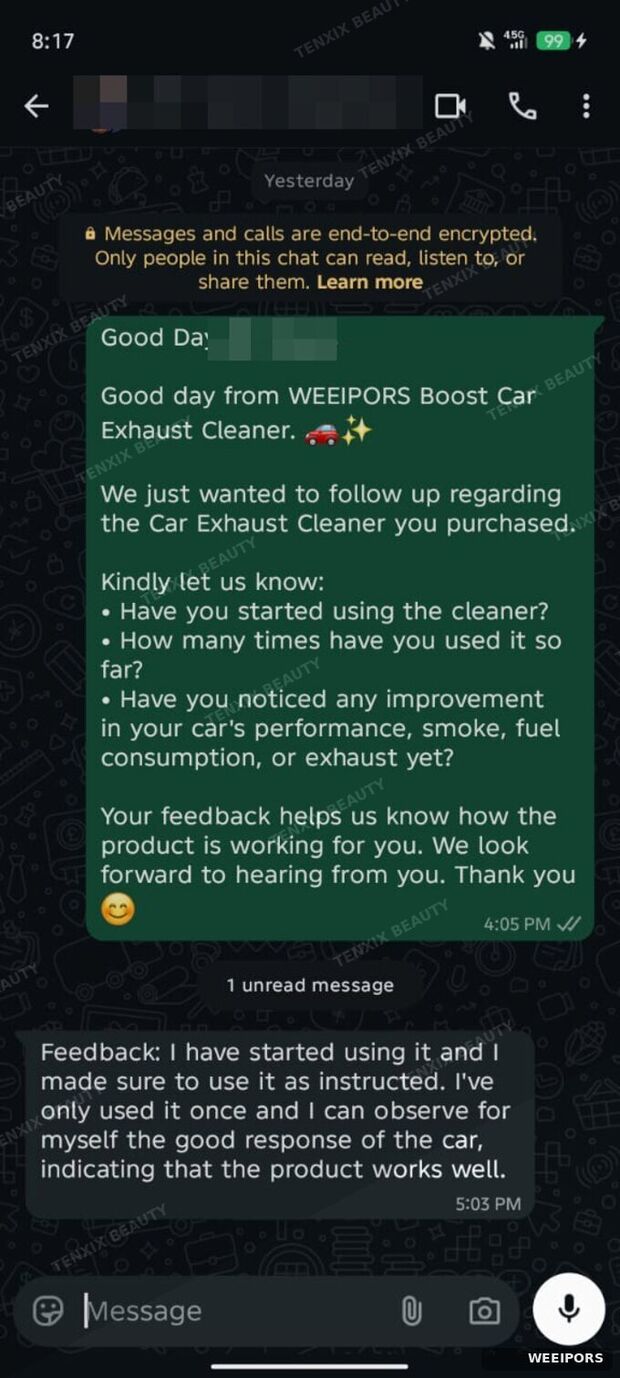
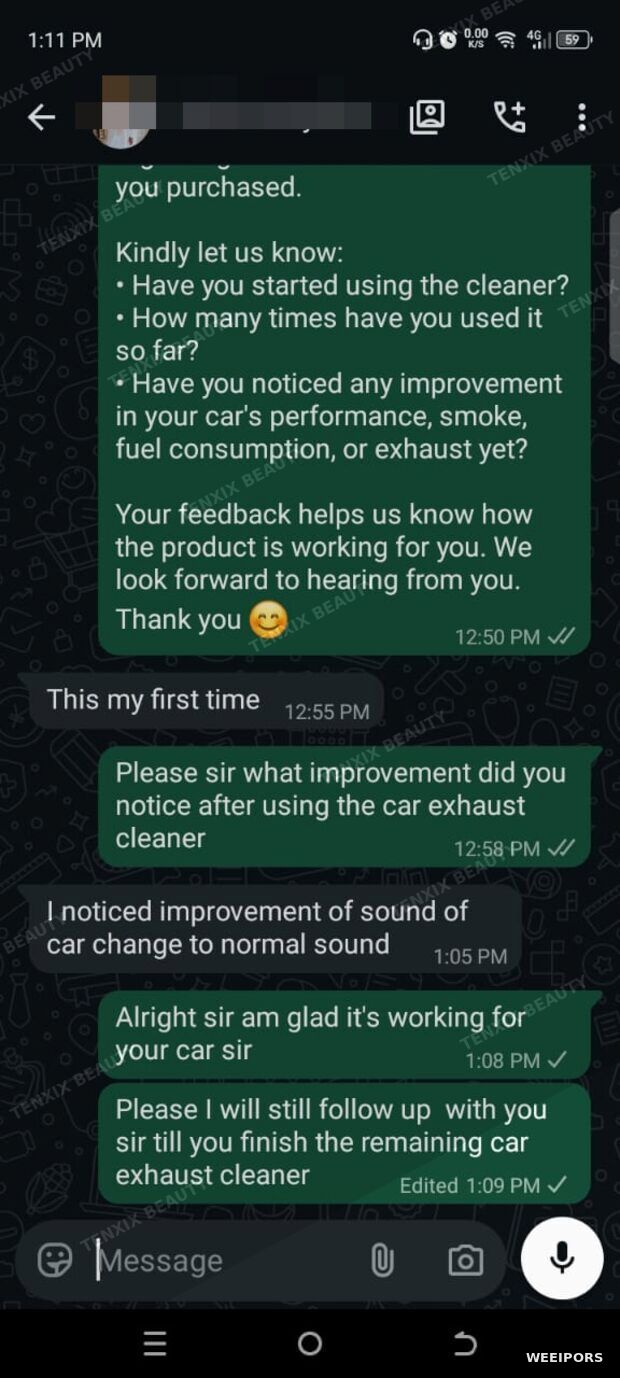
What Drivers Are Telling Us
23,773
Bottles Sold Last Month
Lagos · Abuja · Port Harcourt · Asaba
Benin · Kano · Enugu
We deliver nationwide
Benin · Kano · Enugu
We deliver nationwide
Next time you are at his workshop, ask him: how many customers come back for the same problem?
He will tell you plenty.
Because cleaning carbon is not a repair. It is a visit. And a visit is labour.
Your mechanic cleans one part of it. The other three keep running — which is why you go back.
Your car did not break. It got dirty — slowly, over years, in four places at once. And it happened in an order.
Fuel here is not always clean. Carbon builds up on the injector tips, and instead of a fine mist they start spraying an uneven stream.
A poor spray means fuel that does not fully burn inside the cylinder. That is where the hesitation, the rough idle and the extra fuel consumption come from.
Straight down the exhaust — into your catalytic converter, where it burns instead. That is not what a converter is for. It runs hot and it clogs.
Sooty oxygen sensors send a wrong reading. Your ECU compensates by adding more fuel — which makes every step above worse. That is the loop.
When your mechanic "services" this, he is cleaning one or two of those four places.
The loop is still running. So in a few months you are back, paying labour again.
Not because he is dishonest. Because he cleaned the outcome and left the process.
Cleans the injectors. Nothing else. One of four. The loop restarts within weeks.
Changes how fuel burns. Does nothing to carbon that is already there.
That is your oil side. Your problem is on the fuel side. Different system entirely.
Hundreds of thousands of naira — and if the loop is still running, the new one dirties the same way.
Every one attacked a symptom.
Not one broke the loop.
It follows the same four steps — in reverse
The loop has 4 links. Break one and it rebuilds. This is formulated to clear all four in a single tank.
Get the spray back to a fine mist and fuel starts burning where it is supposed to.
This is where the rough idle and the hesitation actually live.
Almost nothing on the market bothers with this one. A dirty sensor lies to your ECU, and your ECU answers by dumping in more fuel. Clean the sensor and the computer stops overfuelling — which fixes your consumption without anybody touching the engine.
The backlog has to go somewhere. This is the part you can measure at the next emissions check.
That is why single-purpose cleaners work for a few weeks and then stop. They do one step. The other three carry on without them.
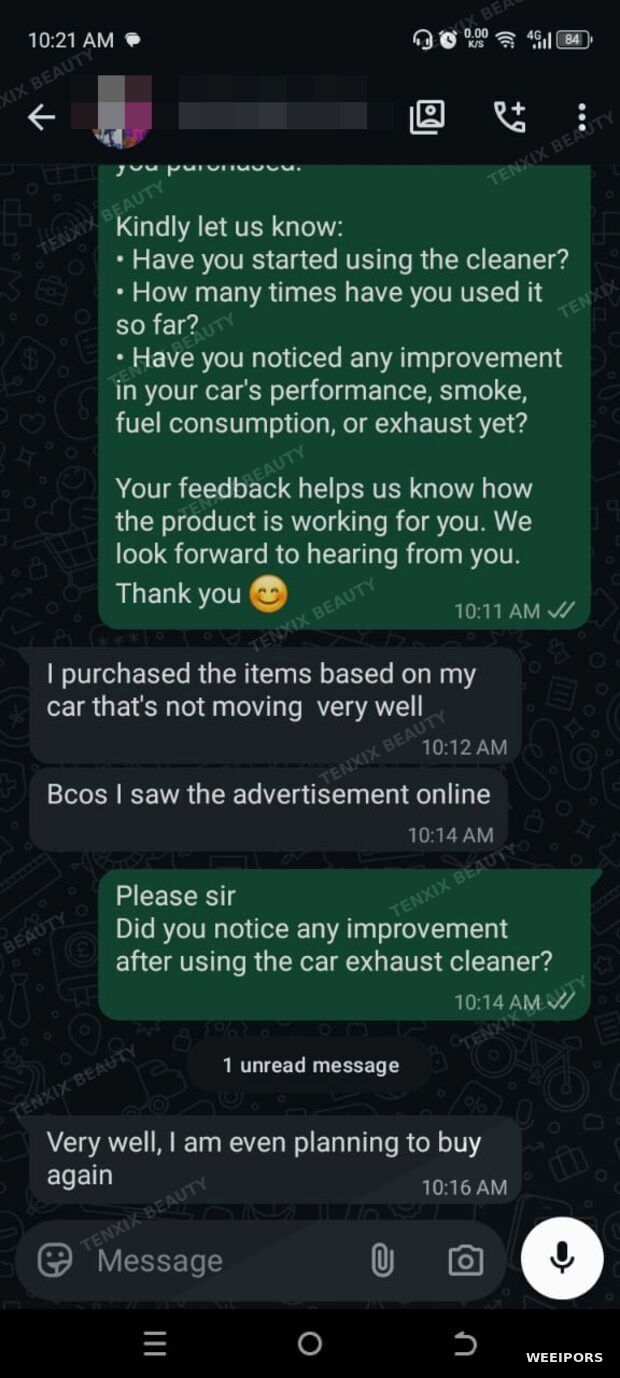
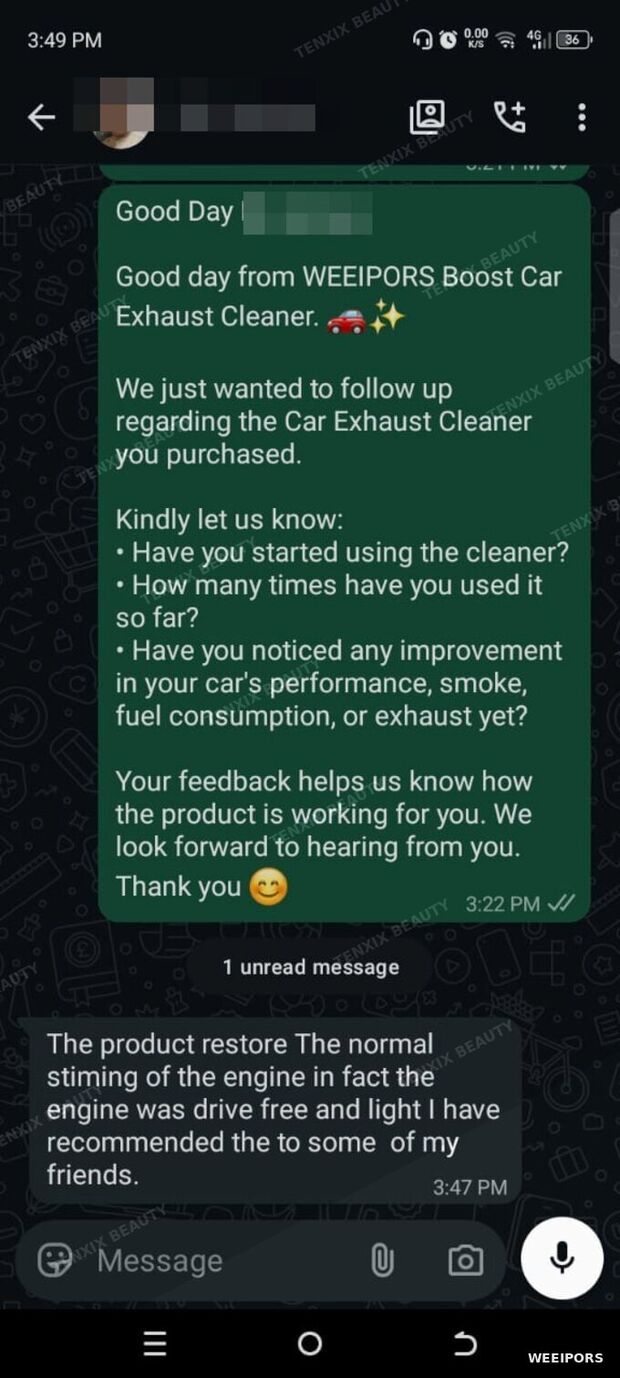
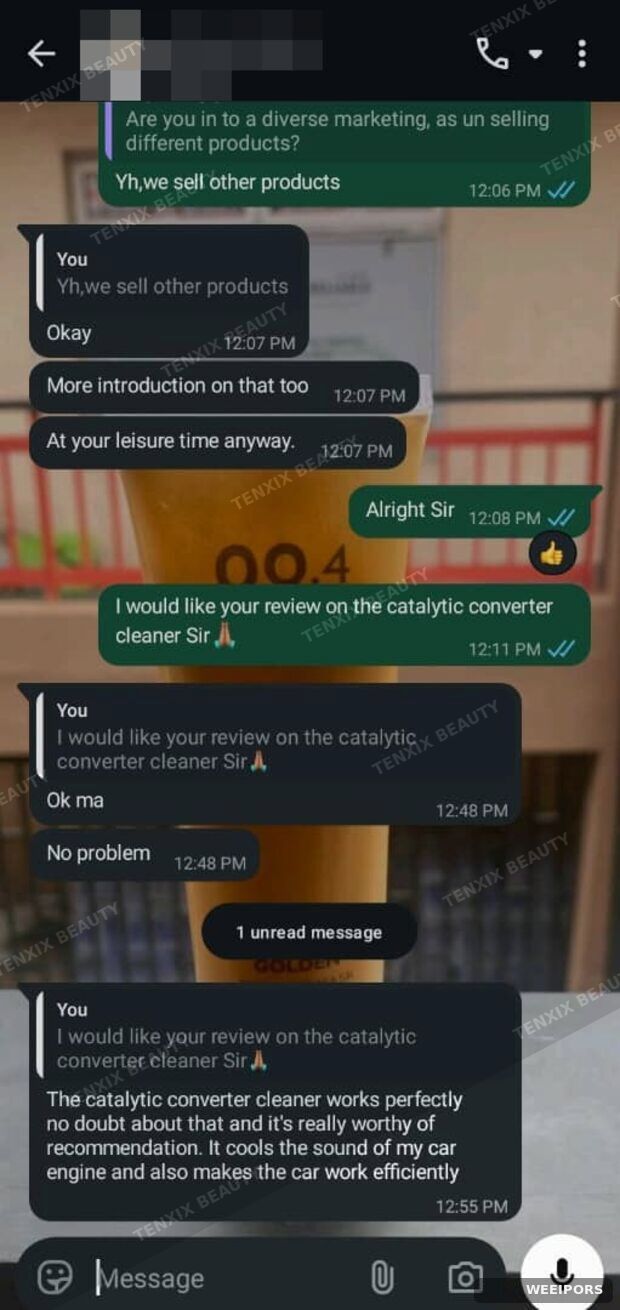
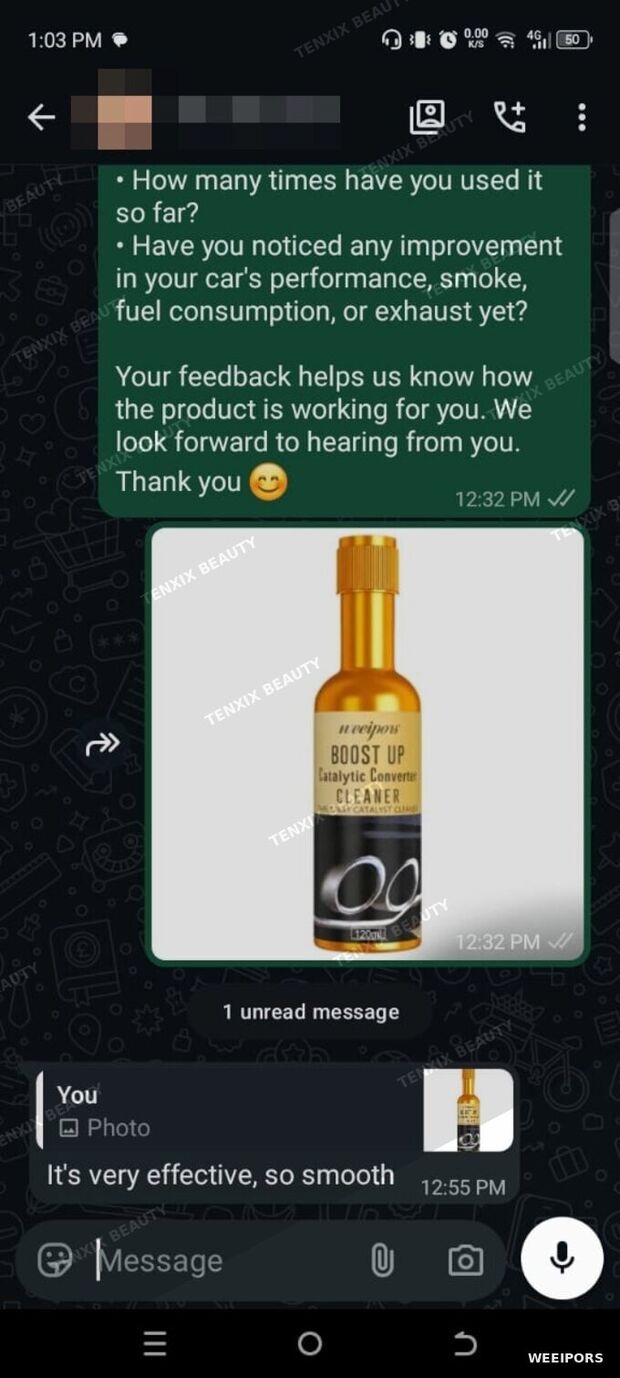
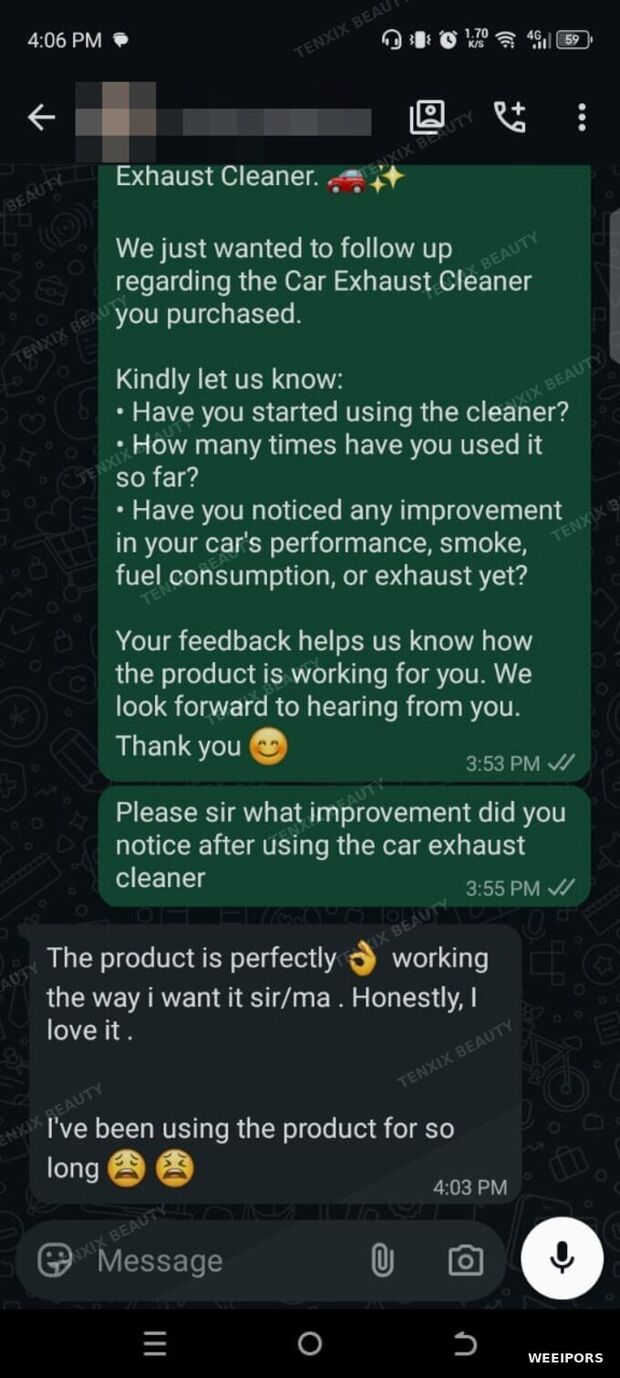
No waiting weeks. Here is what most drivers report, and when.
Empty the bottle into a near-empty tank, then fill up. Do not pour it into a full tank — it will not mix properly and you waste the dose.
Most drivers feel it on that same drive. The idle steadies first — less shaking at traffic, less stumble when the AC kicks in. Then the throttle sharpens. The car picks up when you press instead of thinking about it first.
You may see slightly darker exhaust for a short while. That is the deposits leaving. It clears on its own. It is the cleaner working, not a fault.
The first drive is the injectors and the combustion chamber. Over the rest of that tank it works through the oxygen sensor and the converter — which is where the fuel consumption change comes from, once your computer stops overfuelling.
Measure it properly. Note your odometer at this full tank and again at the next one. Guessing never works — and a real figure is what you will tell your friends.
If it came on because of deposits or a lazy sensor, this is usually where it clears or stops returning after a reset. If it is a failed part or a wiring fault, no bottle fixes that.
Here is the part people miss. The carbon comes back — not because the cleaner failed, but because it builds from the fuel you buy, every day, the same way it did the first time.
One bottle every 60km keeps you ahead of it. That is why drivers who buy three or five are not buying more product — they are buying the next two services in advance, at a fraction of what the workshop charges for the same job.
If your catalytic converter has already physically failed — melted, broken honeycomb, rattling when you tap it — nothing you pour into a tank will bring it back. Ours will not either.
This clears carbon. Use it before you get to that point and you may never get there.
Every month you drive on it, a little more builds up — and the deeper it sets, the harder it is to shift.
The bottle costs less than one visit to the workshop. And unlike the visit, it breaks the loop instead of resetting it.
That is not a sales tactic. That is just how deposits behave.
One 120ml bottle — a full treatment for one tank. Three-way catalyst cleaner.
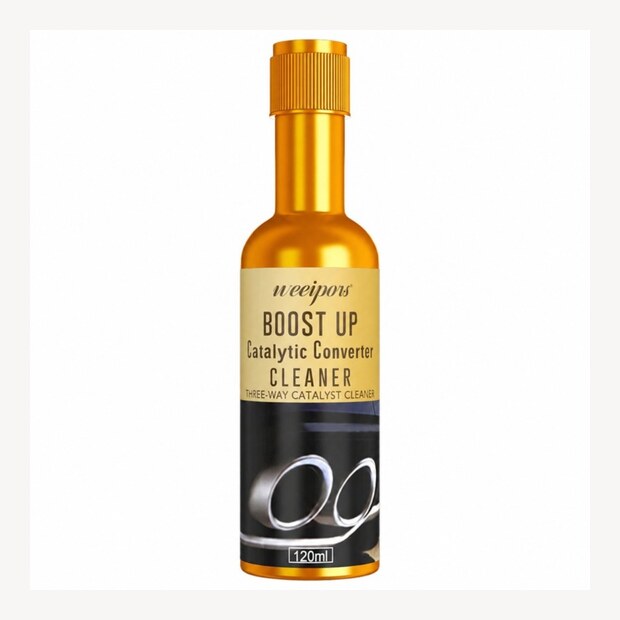
One treatment. Good for trying it on one car.
Two treatments. Covers you for the next few months.
Best value per bottle. For two cars, or a full year of maintenance.
Fill this and we will call you to confirm. You pay the rider on delivery.
Rider brings it. You look at it. You confirm it is sealed.
Then you pay.
No transfer first. No "send half."
No. It is a fuel additive designed to run through a normal fuel system at the stated dose. Do not exceed the dose on the bottle — more is not better.
Both. It is a fuel-tank additive formulated for petrol and diesel engines.
Pour the full bottle into a near-empty tank, then fill up. Drive normally. Do not pour it into a full tank — it will not mix properly.
If the light came on because of carbon deposits or a dirty oxygen sensor, usually yes, by the third tank. If it is a failed part, a wiring fault or a mechanically dead converter, no. Nothing in a bottle fixes those.
Once every three to four months as maintenance. That is far cheaper than the workshop visits it replaces.
No. This clears carbon. It cannot rebuild a converter that has physically failed.
Yes. We deliver nationwide — every state in Nigeria. Lagos, Abuja, Port Harcourt, Asaba, Benin, Kano, Enugu and everywhere in between.
You pay the rider when it reaches you. If it does nothing for your car, you have lost a trip to the workshop you were going to make anyway.
ORDER NOW Pay on delivery