Why Nigerian Women Keep Failing To Clear Their Acne And The 4-Stage Mistake Almost Everyone Is Making
She had spent ₦146,000 across two years on creams, soaps, serums and one dermatologist visit. Her skin was worse than when she started.
What she discovered about how acne actually works changed everything and it had nothing to do with spending more money.
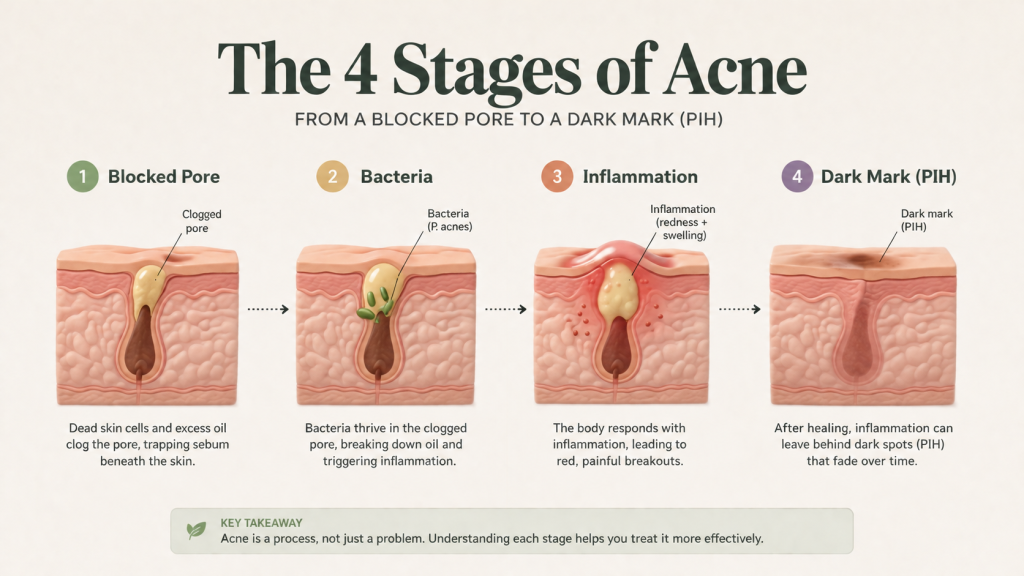
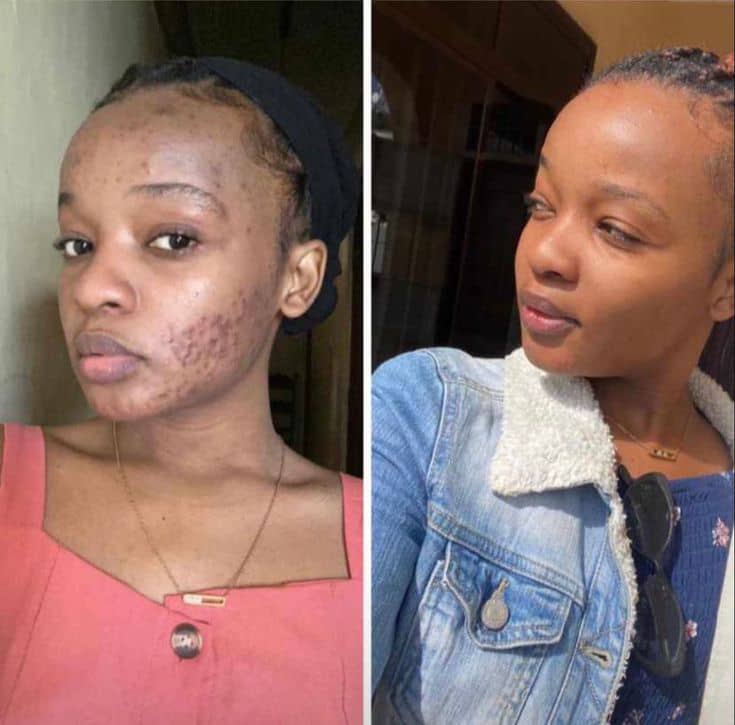
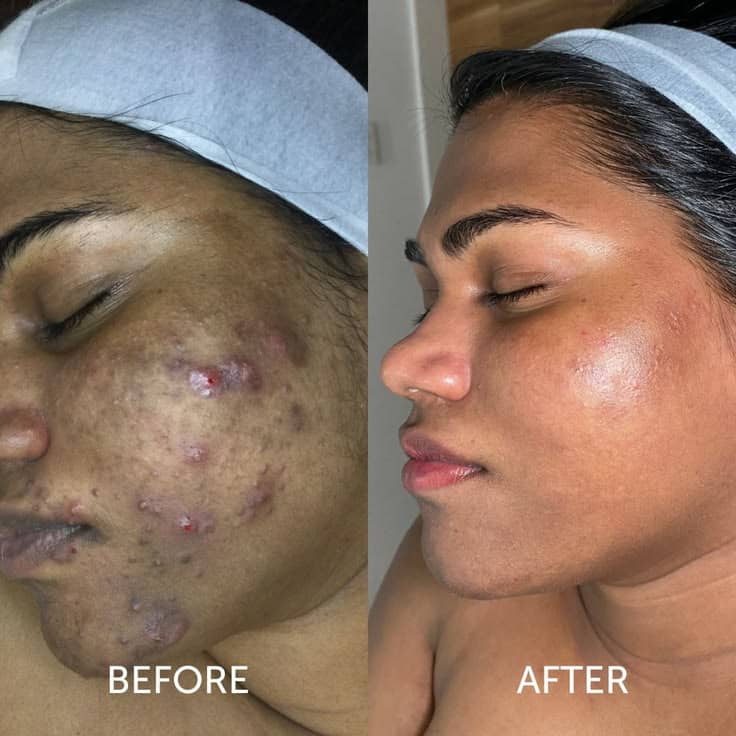
Four mistakes that keep the cycle running
From those conversations, and from the pattern of what people had bought and why it failed, four mistakes recur more than any others.
Treating the pimple and ignoring the mark
This is the single most common error, and it is specific to melanin-rich skin. Products formulated and marketed for lighter skin tones are optimised for stages one to three because on those skin tones, the pimple is the whole problem. It heals and leaves little behind.
On deeper skin, inflammation reliably produces pigment. So a product can genuinely clear your active breakouts and still leave your face looking, to you, exactly as bad as before because what you actually see in the mirror is the accumulated dark marks of the last eight months.
Assuming stronger means faster
The instinct when a product is not working is to escalate. Harsher scrubs. Higher-strength actives layered on top of each other. Alcohol-based toners applied twice a day until the skin feels tight and squeaky.
This damages the skin barrier, and a damaged barrier is more prone to inflammation which means more breakouts and more pigment, not less. Several women described skin that had become "sensitive over time," which is generally not a change in skin type but the accumulated result of over-treatment.
Skipping the preparation step
Serums are asked to do a great deal of work, and a serum applied over a layer of dead surface cells and residual oil simply cannot penetrate properly. A meaningful percentage of the active never reaches the pore at all.
This is why a well-formulated serum can genuinely underperform on someone who owns it, uses it, and follows the instructions the delivery route was blocked before the product ever went on.
Quitting at week two
Skin cell turnover takes roughly four weeks. Pigment fades more slowly still. Yet the overwhelming majority of people abandon a product somewhere between day ten and day twenty often at exactly the point where congestion already sitting beneath the skin is being pushed to the surface, which looks like the product making things worse.
"I now know I threw away at least two things that were probably working," Ngozi said.
What a complete routine actually has to cover
Laid out plainly, the gap between what most people are using and what the problem requires becomes obvious.
| Stage of the cycle | Face wash alone | Spot treatment alone | A complete system |
|---|---|---|---|
| Clears surface & dead cells | Partly | No | Yes |
| Unclogs inside the pore | No | Partly | Yes |
| Kills acne bacteria | No | Yes | Yes |
| Reduces inflammation | No | Often worsens | Yes |
| Fades existing dark marks | No | No | Yes |
| Protects the skin barrier | Varies | Rarely | Yes |
Read down the final two columns and the reason for the two-week-improvement-then-relapse pattern is no longer mysterious. It is arithmetic.
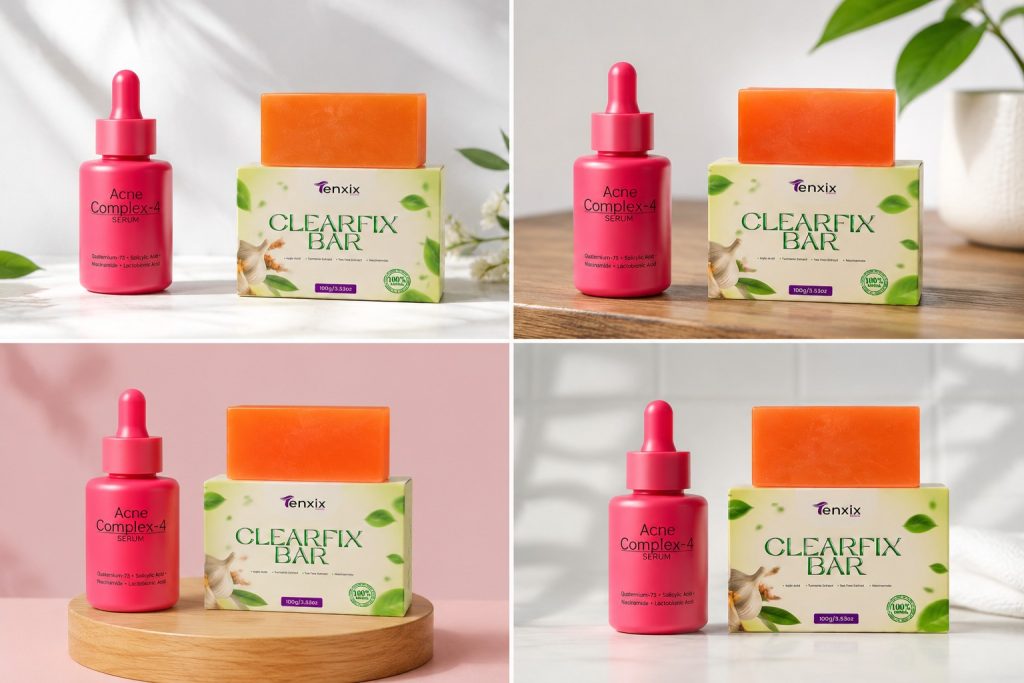
Ngozi's own timeline was roughly what the clinical logic would predict. A slightly worse first ten days as congestion surfaced. Noticeably fewer new breakouts by week two. The dark marks — the thing she actually cared about — began visibly lightening somewhere in week four.
"Week four was when I stopped wearing foundation to work," she said. "That was the moment for me. Not when the pimples went. When I stopped needing to cover my face."
The combined cost of the two products, currently sold together as a system, is ₦29,000 — against the ₦146,000 she had already spent arriving at it.
Both products are available directly from the brand with nationwide delivery and payment on delivery, and the company offers a 30-day money-back guarantee — which, given how many people quit at week two, is arguably the most relevant part of the offer.
BASIC
Start Your Routine
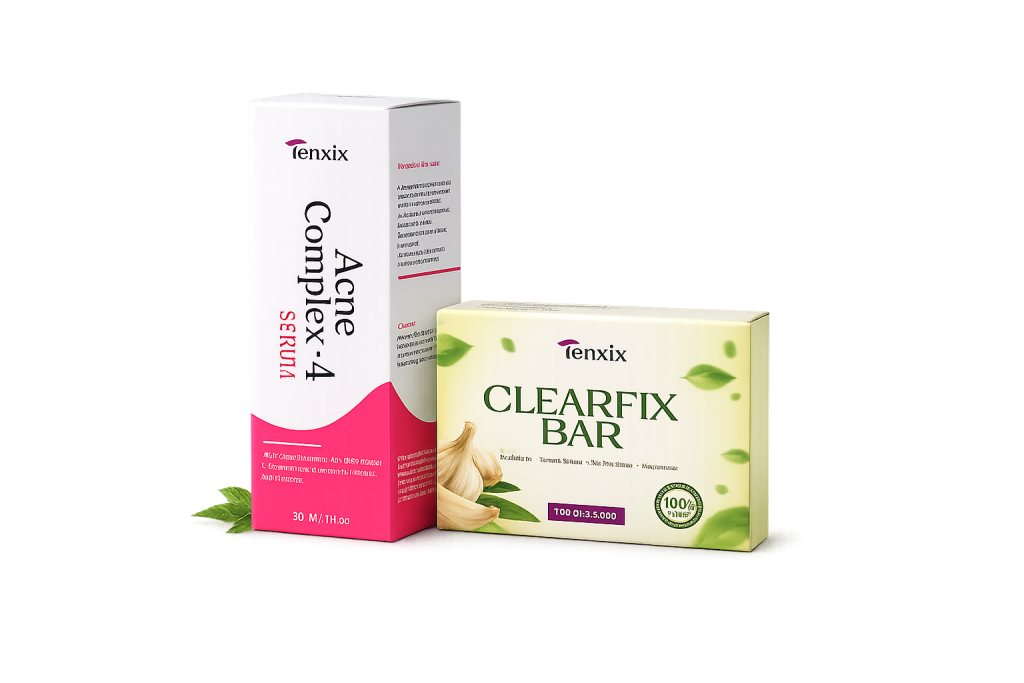
BOUGHT SEPARATELY: ₦40,000
You Save ₦11,000 — 27% Off
TODAY'S PRICE: ₦29,000
- 1 Acne Complex-4 Serum (30ml)
- 1 Clearfix Bar (100g)
- Payment on Delivery
- Free Nationwide Delivery
- 60-day Satisfaction Promise
- Printed Skincare Routine Card
PREMIUM
The Full Routine
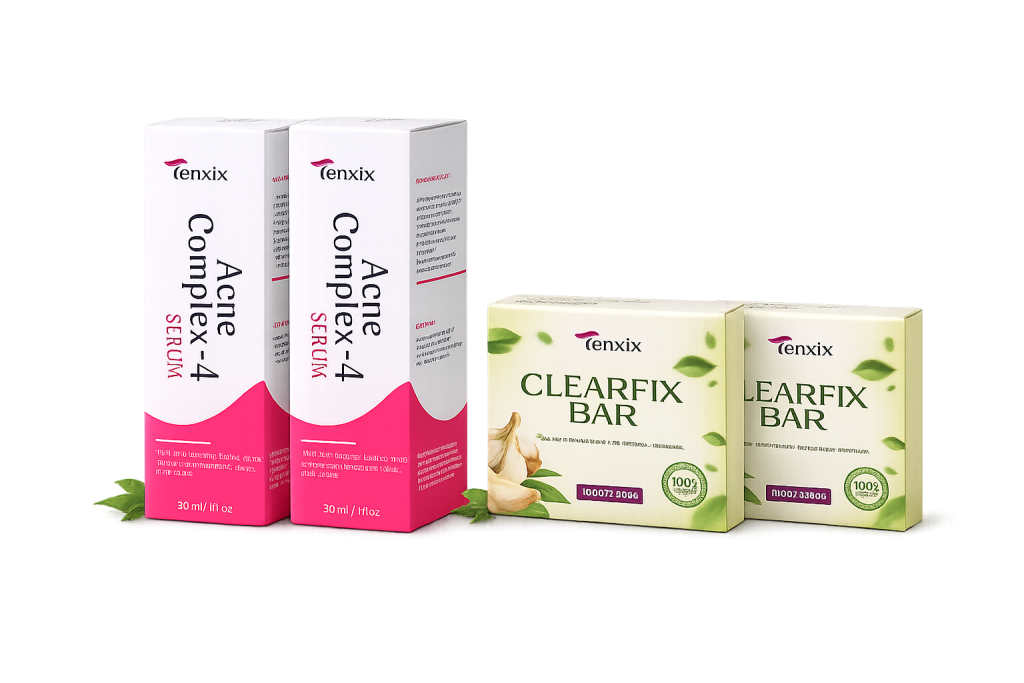
BOUGHT SEPARATELY: ₦80,000
You save ₦33,500 — 42% off
TODAY'S PRICE: ₦46,500
- 2 Acne Complex-4 Serums (30ml)
- 2 Clearfix Bars (100g)
- Payment on Delivery
- Free Nationwide Delivery
- 60-day Satisfaction Promise
- Printed Skincare Routine Card
- Priority Dispatch (Ships First)
BEST VALUE
The Complete Bundle
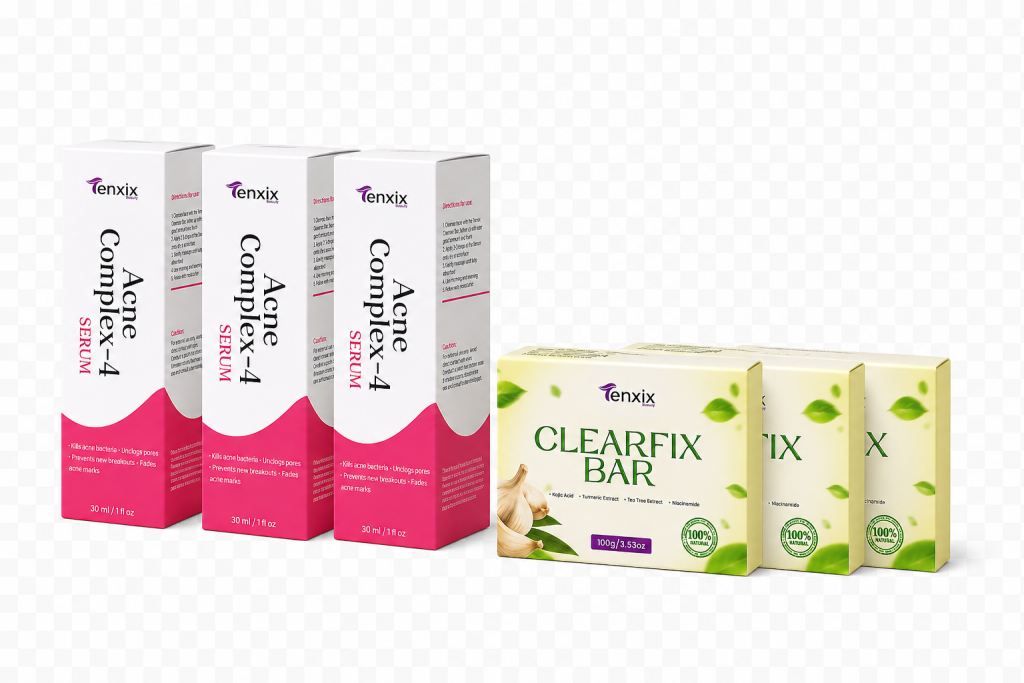
BOUGHT SEPARATELY: ₦120,000
You save ₦60,000 — 50% off
TODAY'S PRICE: ₦60,000
- 3 Acne Complex-4 Serums (30ml)
- 3 Clearfix Bars (100g)
- Payment on Delivery
- Free Nationwide Delivery
- 60-day satisfaction promise
- Printed skincare routine card
- Priority Dispatch (Ships First)
- Lifetime 20% Discount On Future Orders
- Best Price Per Unit — Lowest ₦ Per Combo
Complete Your Order
Takes under a minute. Our team calls to confirm your address before dispatch.
Individual results vary. These are cosmetic skincare products and are not intended to diagnose, treat, cure or prevent any disease. Consult a qualified healthcare professional for persistent or severe skin conditions.
© 2026 TENXIX. All rights reserved. · Privacy Policy · Terms of Service · Contact